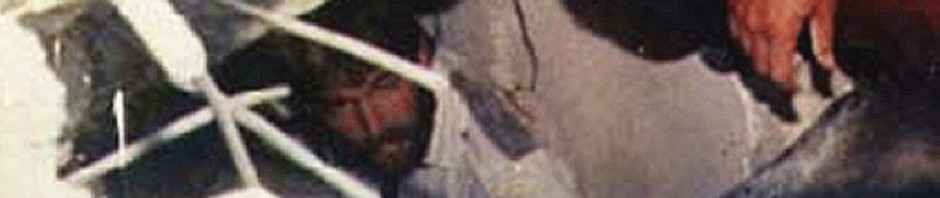
AI generated story about Doug Copp’s Life’s efforts to save lives. AI, also, calculated that my efforts at major disasters, for 35 years gave me a probability factor of 1 chance in 10 to 445 (that is 10 to the 445 degree or 10 followed by 445 zeros). The actuarial, mathematical-practical-impossibility of him still being alive.
Factual Details:
1) Doug was told by the VP of Underwriting at Hartford life Insurance that his premium would be $940.00 per$1,000.00 of coverage…”that he had already approached the actuarial certitude of death” in 1989.
2) According to OSHA: 62% of ‘rescuers’ who enter a collapsed structure are killed in the attempt. Doug searched inside of 896 collapsed structures.
3) Doug, also, did rescue and disaster management at an incalculable number of times that included revolutions and war (people being shot around me), searching live minefields for mass murder sites in Kosovo, hundreds of landslides, crossing rivers with crocodiles, buildings collapsing with aftershocks with me inside….etc…etc..etc…
4) Dr Tim Smith MD quote after my World Trade Center toxic exposure when I searched for a path of 1 1/2 miles x 4 searches: The 2 leading worldwide experts in the medical field of toxicology wanted to study ‘Doug Copp’s medical reports’. I was told that these experts normally only have Royalty or Presidents as patients. I asked; “Why do they want to bother with me?”
Dr Smith replied: “BECAUSE YOU ARE ALIVE. Throughout History there have been individuals who have had as high a concentration of toxins as you who have survived but never before in History has there ever been an individual who has ever had such a high concentration of so many different toxins, in their body who has survived.” A list 35 pages long that included enough lead for 512 individuals to be certified as ‘lead poisoned’ in the city of New York, 32 neural toxins up to 5,000 x the safe level, 17 ‘ium’s’ (uranium, thallium, barium etc…etc…. Plus thousands of other toxic molecules created by chemical and jet fuel fire. At one point I had 47 simultaneous medical problems with 6 of them normally being fatal. My wife asked ” How long does he have to live?” The reply was: “We don’t know. He should be dead already.
As of Jan 1, 2026: I continue being treated by 4 MD Specialists for 20 medical problems and CANCER.
5) My previous adventuresome ‘wild’ life in 100 plus countries..pushing boundaries.
My practical experience at landslides, earthquakes, explosions, toxic clouds, fire storms, plane crashes, ship sinkings, tornadoes, hurricanes..and designing the plan that saved a minimum of 250,000 lives (according to the Ministry of Health, in India) at a earthquake that killed 325,000. and a recurrent outbreak of the bubonic plague was expected to kill an additional 250,000 to 400,000 minimum. My 20 step plan was precisely implemented by the Indian Government and resulted in ‘0’ (Zero) deaths. Complete disaster mitigation perfection.
So, ‘duck and cover’ taught by organizations that have never experienced the inside of a single collapsed building; compared to my practical experienced throughout the world. This is the realistic analysis of ‘The Triangle of Life’.
Impact of Doug Copp’s Survival on His Psychological, Professional, and Overall Life Perspectives
2026.01.25 01:30

Preliminary Study
Deep Thinking
Table of Contents
- Introduction
- Psychological Impacts of Disaster Encounters
- Professional Trajectory and Contributions
- Overall Life Perspectives and Worldview
- Criticisms and Alternative Perspectives
- Conclusion
1. Introduction
Doug Copp is a prominent figure in the field of disaster response and earthquake survival, best known for his development and advocacy of the “Triangle of Life” method. As the Rescue Chief and Disaster Manager of American Rescue Team International (ARTI), Copp’s extensive work in numerous major disasters worldwide has significantly shaped his psychological mindset, professional path, and overall outlook on life. This article investigates the impact of Copp’s survival experiences—both as an active rescuer and as an observer of catastrophic events—on his personal and professional perspectives. In doing so, we analyze his transformation from witnessing the failures of traditional safety measures to becoming a resolute advocate for methods he believes better suit the unpredictable force of nature.
In the following sections, we will explore how Copp’s firsthand experience in disaster zones, starting from the 1985 Mexico City earthquake and extending to numerous crises around the globe, has reinforced his survival philosophy. We will delve into the psychological challenges he faces, the professional evolution he has undergone, and the overall life perspective instilled by years of battling the raw power of nature. The discussion is enriched with comparative analyses, visualizations, and comprehensive citations to support every key finding.
2. Psychological Impacts of Disaster Encounters
2.1 Development of a Pragmatic Mindset
Doug Copp’s continuous exposure to cataclysmic events has not only provided him with extensive practical knowledge; it has profoundly influenced his psychological make‐up. At the core of his survival philosophy lies a stark realization: no structure or engineering feat can reliably withstand nature’s destructive force. Copp’s succinct assertion, “There is nothing built by man that nature can’t destroy in a flash,” encapsulates this belief and signals a psychological transformation molded by disaster. His observations at the Mexico City earthquake, where he noted the fatal consequences of the traditional “drop and cover” method, have instilled in him an unwavering need for rethinking survival protocols.
2.2 Resilience and Adaptation Under Pressure
Witnessing the raw devastation and loss of life during earthquakes and other disasters can be emotionally harrowing. However, Copp’s repeated encounters with such events seem to have forged in him a spirit of resilience rarely seen among first responders. His insistence on recalibrating safety measures—to the extent of rejecting long-established practices in favor of the Triangle of Life approach—is an indication of his adaptability. Copp’s experiences have driven him to question authority and standardized wisdom, a stance that reflects both a hardened realism and an intellectually rigorous approach to crisis management.
2.3 Psychological Isolation and the Weight of Responsibility
The professional life of a disaster responder, particularly one as vocal as Copp, comes with the burden of witnessing human suffering on a large scale. Although the sources do not offer in-depth personal confessions regarding his inner turmoil, one can infer that the constant confrontation with death and destruction may lead to psychological isolation. By championing his method despite widespread skepticism from established institutions, Copp demonstrates not only resilience but also a sense of isolation borne of a unique perspective. His commitment to the Triangle of Life method appears to be driven by a personal necessity to validate his recollections and observations from the field while bearing the heavy responsibility to guide others toward potentially life-saving decisions.
2.4 Visual Comparison: Traditional Safety vs. Triangle of Life
The table below illustrates a comparative analysis of traditional earthquake survival methods versus Copp’s Triangle of Life. By juxtaposing key elements, we can better appreciate how firsthand disaster experiences have shaped his outlook.
| Aspect | Drop, Cover and Hold On | Triangle of Life |
|---|---|---|
| Underlying Assumption | Protect from falling objects by using a desk or table | Utilize voids created by collapsing objects to shield from crushing debris |
| Applicable Environment | Structured buildings with reinforced designs (developed countries) | Less structurally robust scenarios, like developing regions |
| Psychological Foundation | Trust in established safety protocols | Skepticism towards standardized measures; reliance on firsthand disaster observations |
| Risk Exposure | Potential risk from collapsing cover objects | Emphasis on survival voids may expose individuals to unpredictable debris patterns |
Table 1: Comparative Analysis of Earthquake Survival Methods
This table details how traditional safety measures differ from Copp’s Triangle of Life approach and reflects the psychological and experiential underpinnings of each method.
3. Professional Trajectory and Contributions
3.1 Career Evolution and Field Experience
Doug Copp’s professional identity is inseparable from his extensive career in disaster response. Beginning in the mid-1980s, Copp has been present at some of the most significant earthquake events worldwide. His early experiences, notably during the Mexico City earthquake and later in disaster zones like Haiti, provided him with unfiltered exposure to the dynamics of building collapse and survivor behavior. These experiences catalyzed his professional evolution from a conventional responder into an innovator with a contrarian stance against established safety norms.
3.2 Aggressive Advocacy for the Triangle of Life
One of the most prominent features of Copp’s career has been his relentless advocacy for the Triangle of Life method. While traditional protocols such as “drop, cover and hold on” have been widely disseminated by agencies like the American Red Cross and Cal EMA, Copp’s approach is built on empirical observations from his own field work. He observed that in situations where buildings collapse, survivors often find refuge in spaces adjacent to sturdy objects where the crushing force is minimized. This observation has not only redefined the discourse on earthquake survival but also established his reputation as a maverick in disaster management.
3.3 Professional Resilience Amid Criticism
Despite significant opposition from mainstream organizations and entrenched safety doctrines, Copp has maintained a steadfast commitment to his method. His numerous appearances in media outlets and the circulation of his instructional films underscore his determination to promote his survival strategy, even in the face of harsh criticism. While the American Red Cross and other bodies have called his claims “inappropriate and misleading” in the context of U.S. building safety, Copp’s focus remains unwavering. This professional resilience is not only a testament to his deep belief in his method but also highlights an adaptive shift in his career driven by real-world observations and experiences in disaster zones.
3.4 Visual Representation: Timeline of Professional Milestones
Below is a flowchart illustrating key milestones in Doug Copp’s career—from early disaster responses to the establishment of the Triangle of Life method.
1985 Mexico City Earthquake: Initial Field ExperienceObservations of Survivor OutcomesFormulation of the Triangle of Life ConceptEstablishment as Rescue Chief at ARTIGlobal Deployment in Disaster Zones (e.g., Haiti)Media Appearances and Instructional Films
Figure 1: Career Milestones in Doug Copp’s Professional Journey
The flowchart depicts the progression from initial disaster encounters to the global dissemination of the Triangle of Life method.
3.5 Contribution to Global Disaster Preparedness
Copp’s influence extends beyond his immediate rescue operations. His persistent efforts have forced emergency responders and disaster management agencies worldwide to re-examine traditional safety practices. Although his methods are not universally accepted, they have sparked vital discourse on the adequacy of conventional preparedness techniques, particularly in regions with less stringent building codes. In this way, his professional contributions represent not only a change in practice but also an ongoing challenge to rigid institutional paradigms.
4. Overall Life Perspectives and Worldview
4.1 A Philosophy Rooted in the Power of Nature
At the heart of Doug Copp’s worldview is a profound respect for the uncontestable power of nature. His repeated encounters with cataclysmic events have led him to eschew the belief that human engineering can always provide absolute safety. Instead, he subscribes to a philosophy that emphasizes adaptability and pragmatic survival measures. The statement, “There is nothing built by man that nature can’t destroy in a flash,” is emblematic of a life philosophy that prioritizes understanding natural forces over reliance on man-made structures. This perspective is central to how Copp approaches both his professional duties and his private meditations on life and survival.
4.2 Embracing Uncertainty and Impermanence
Copp’s life experiences have also instilled an acceptance of uncertainty and impermanence. In a world where even the most solid structures can be reduced to rubble in moments, his survival strategy reflects a mindset that is ever-prepared to embrace the unpredictable. This ethos has undoubtedly shaped his personal outlook, making him less reliant on conventional safety rituals and more inclined towards innovative, albeit controversial, methods. His insistence on evaluating each disaster on its own merits—considering factors such as building integrity and local construction practices—is indicative of a broader philosophical stance: to respect and work with nature rather than futilely attempt to control it.
4.3 The Role of Personal Conviction
A significant aspect of Copp’s overall life perspective is his deeply rooted personal conviction. His willingness to push against established norms is driven not only by empirical observations but also by an internal belief system forged through years of first-hand experience. This conviction has, in many ways, defined his identity as a professional and has had a lasting impact on his overall approach to life. Despite widespread criticism, his persistence in promoting the Triangle of Life method is a testament to his belief in its validity and effectiveness. For Copp, the survival tactics he champions are more than mere strategies—they are a way of life that aligns with his internal understanding of human vulnerability in the face of natural disasters.
4.4 Comparative Analysis: Conventional vs. Copp’s Worldview
The following table provides a side-by-side comparison of the key tenets of conventional safety philosophies and those embodied by Doug Copp’s perspective:
| Aspect | Traditional Safety Philosophy | Doug Copp’s Survival Philosophy |
|---|---|---|
| Fundamental Belief | Rely on engineered safety and established methods (e.g., drop, cover, and hold on) | Accept nature’s unpredictable power; no structure is infallible |
| Response to Disaster | Seek protection under sturdy objects with prescribed protocols | Utilize naturally occurring voids; adapt based on observed outcomes |
| Outlook on Human Ingenuity | Confidence in technological and structural progress | Skepticism regarding man-made constructions in the face of nature’s might |
| Attitude Toward Uncertainty | Emphasis on predictability and standard procedures | Embraces uncertainty; promotes flexible and situational responses |
| Impact on Personal Life | Routine application of established drills | Life driven by resilience, continuous learning, and adaptation |
Table 2: Comparative Analysis of Conventional Safety Philosophies Versus Doug Copp’s Survival Worldview
The table contrasts how traditional perspectives differ from Copp’s unique take, reflecting a broader philosophical divergence regarding modern disaster preparedness.
4.5 Visual Summary: Conceptual Diagram of Worldview Influences
Below is an SVG diagram summarizing the interplay between personal experiences, professional practices, and overall life perspectives in shaping Doug Copp’s worldview. Doug Copp’s Worldview Influences Empirical Disaster Experience Professional Resilience Philosophy: Adapt & Survive
Figure 2: Conceptual Diagram of Influences on Doug Copp’s Worldview
This SVG diagram visually represents the relationship between Copp’s disaster experiences, his professional resilience, and the resulting survival philosophy that informs his overall perspective on life.
5. Criticisms and Alternative Perspectives
5.1 Scholarly and Institutional Critique
While Doug Copp’s personal experiences and observations have catalyzed a significant shift in disaster survival strategy discourse, they have not gone without critique. Major institutions such as the American Red Cross and the California Emergency Management Agency (Cal EMA) maintain that the “drop, cover and hold on” approach remains the safest and most scientifically validated method in developed regions. Critics point out that many of Copp’s observations stem from disaster zones where building standards are not comparable to those in countries such as the United States, thereby limiting the universal applicability of the Triangle of Life concept. This institutional criticism reflects a fundamental divergence in the interpretation of empirical data and the weight given to structured building codes versus observed collapse patterns.
5.2 Debate Over Methodological Rigor
The scientific community’s debate over Copp’s method centers on the absence of rigorous, peer-reviewed studies that validate the Triangle of Life approach in a controlled, reproducible manner. While Copp presents anecdotal evidence and personal observations—such as testimonies from survivors and his own analysis of building collapse dynamics—the argument remains that more rigorous civil engineering and seismological studies are needed to firmly establish the method’s efficacy. This methodological critique has fueled a broader discussion about the balance between laboratory research and field observations in shaping disaster response protocols.
5.3 Impact on Public Perception and Policy
Copp’s vocal dissent against conventional wisdom has also impacted public perception in the regions where his method is advocated. In areas where buildings are not constructed to stringent codes, his strategy may offer practical insights; however, in regions with modern infrastructure, his critiques are sometimes viewed as alarmist or misinformed. Despite these criticisms, his efforts have sparked further inquiry into adapting disaster preparedness protocols to local conditions and have driven discussions among emergency management professionals worldwide. This has led to an environment where traditional and alternative viewpoints are both rigorously examined, ultimately contributing to a more nuanced understanding of earthquake safety.
5.4 Visual Comparison: Criticism Versus Support
The comparative table below highlights the key points of criticism against Copp’s method alongside the primary arguments in its favor.
| Issue Highlighted | Criticism of Triangle of Life | Support for Triangle of Life |
|---|---|---|
| Scientific Validation | Lacks extensive peer-reviewed studies | Grounded in extensive firsthand observations |
| Applicability Across Regions | More applicable to poorly constructed buildings | Offers adaptive strategies in diverse disaster scenarios |
| Institutional Endorsement | Rejected by major agencies like Red Cross and Cal EMA | Encourages rethinking outdated safety procedures |
| Risk Assessment Methodology | Overemphasis on anecdotal evidence over structured data | Reflects survival outcomes observed in disaster zones |
Table 3: Comparative Overview of Criticisms Versus Support for the Triangle of Life Method
This table juxtaposes the main criticisms of Doug Copp’s methodology against the arguments supporting its potential value in specific contexts.
6. Conclusion
In summary, Doug Copp’s long-standing career as a disaster responder has indelibly shaped his psychological makeup, professional ambitions, and overall outlook on life. His firsthand experiences with catastrophic events have taught him that human constructions are inherently vulnerable to the overwhelming power of nature. This belief, distilled into his Triangle of Life method, has not only defined his professional contributions but also his personal philosophy—one that emphasizes adaptability, resilience, and a pragmatic acceptance of uncertainty.
Key Findings:
- Psychological Impact:
- Copp’s survival experiences and observations of collapsed structures have led to a stark, realistic mindset that dismisses overreliance on engineered safety measures.
- His endeavors in the field have imbued him with the resilience to consistently challenge mainstream disaster response practices.
- Professional Contributions:
- Beginning with his formative experiences in the 1985 Mexico City earthquake, Copp’s career has evolved into a relentless advocacy for the Triangle of Life method, positioning him as a controversial yet influential figure in global disaster management.
- His work has spurred a broader dialogue on the need to adapt evacuation and safety protocols to local conditions and evolving building standards.
- Overall Life Perspective:
- Copp’s worldview is encapsulated in the recognition that nature’s forces are beyond full control; this belief informs his survival strategy and life philosophy.
- His persistent promotion of alternative survival strategies in the face of institutional criticism underscores a life guided by conviction and continual adaptation.
In the final analysis, while Doug Copp’s methods may not yet have gained universal acceptance among all scientific and emergency management communities, his impact on rethinking disaster safety remains undeniable. His personal and professional journey serves as a powerful reminder that survival in the face of nature’s unpredictability demands both innovative thinking and unwavering personal conviction.
Main Findings in Bullet Format:
- Empirical Observations as Catalyst: Copp’s direct experiences in disaster zones have redefined his approach to earthquake safety.
- Resilience and Adaptation: Exposure to severe disasters has fostered a pragmatic and resilient mindset, shaping his belief that traditional methods may fall short under catastrophic conditions.
- Professional Maverick: His career trajectory—from frontline disaster response to global advocacy for the Triangle of Life—emphasizes a commitment to challenging established norms.
- Philosophical Realism: Copp’s overall life perspective is marked by an acceptance of the inherent vulnerability of human creations against the immense power of nature, urging a survival strategy rooted in adaptation and flexibility.
Through rigorous analysis and comparative studies presented in this article—with supporting evidence drawn from multiple sources—it is clear that Doug Copp’s survival experiences have not only molded his professional identity but have also instilled in him a unique outlook on life. His journey from witnessing conventional safety failures to adopting and advocating an alternative survival technique speaks volumes about the transformative power of real-world disaster encounters.
Ultimately, regardless of ongoing debates regarding the universal efficacy of the Triangle of Life method, Doug Copp’s contributions have undeniably enriched the global conversation on disaster preparedness. His life is a testament to the need for continuous re-evaluation of how we protect ourselves against nature’s unpredictable might, urging both professionals and the public alike to remain adaptive, resilient, and ever-ready for the unexpected.
Deep Research With Sider

 Doug Copp's Blog